Legal AI usually forces law firms to choose between the best models and control of their client data. Judicus, built on Ragsense, removes that choice: one system for public legal research and private casework, where confidential files are processed on local models and only public-law tasks may use external ones.
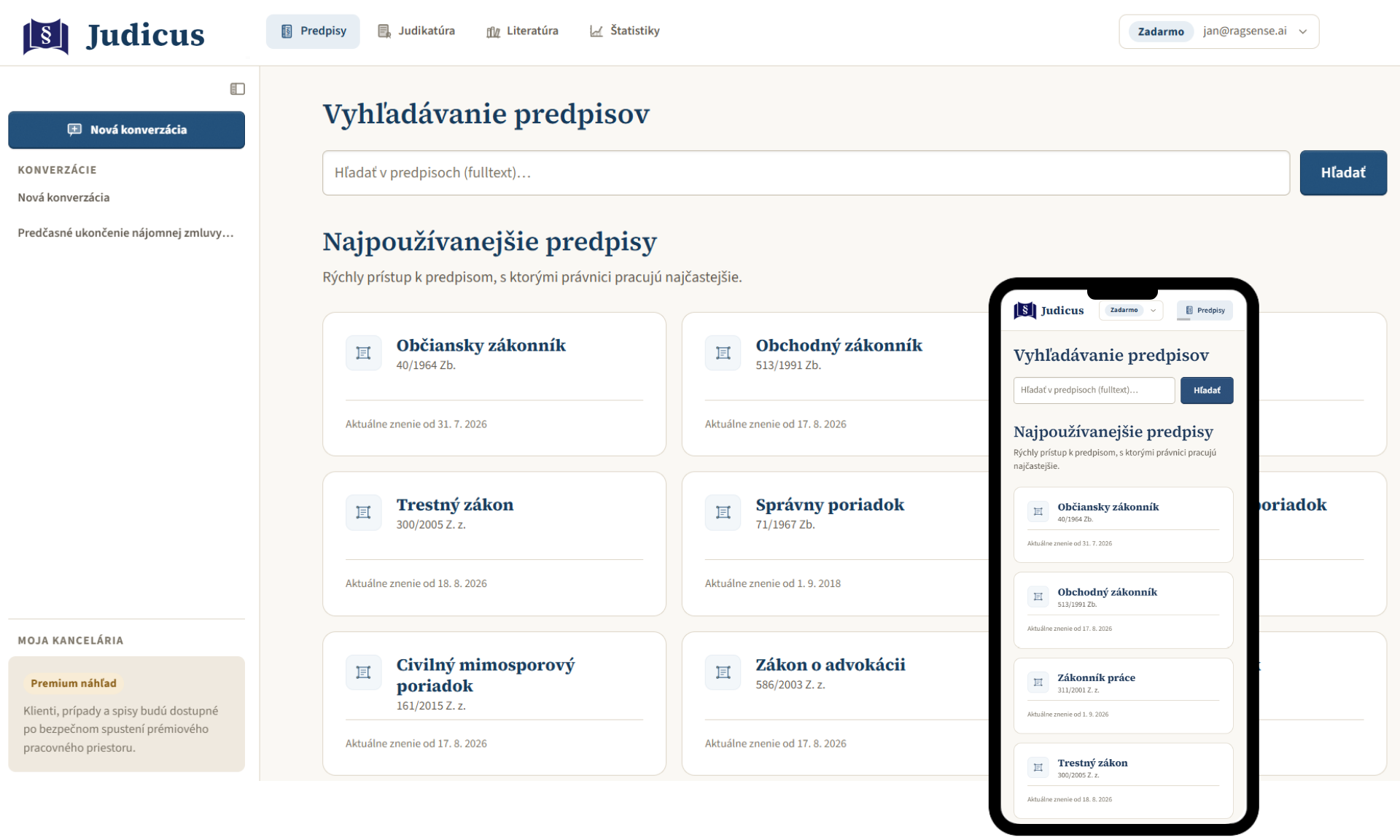
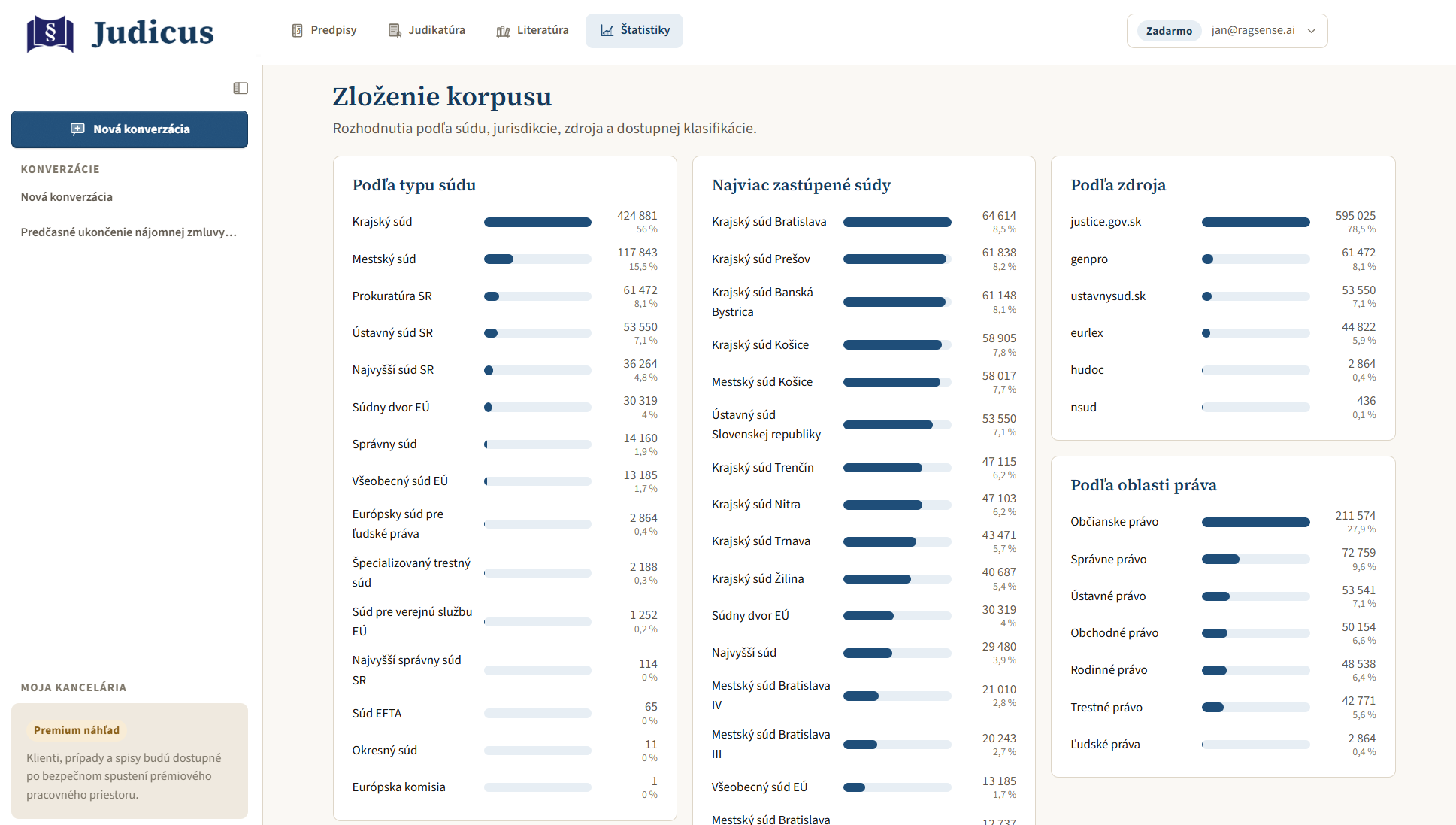
Judicus connects official legal sources with dates and links: legislation through time, national and EU case law, citations, fiscal guidance and legislative materials. It is live in Slovakia and Czechia, with planned extensions to France and other European countries. Every decision is classified by court, jurisdiction, source and area of law.
Legal documents indexed
Resolved citation relationships
Public-source pipelines
Continuous sync jobs
Legal data, access rules, model execution and user applications are separate layers, so the firm can replace a model or block a provider without rebuilding its knowledge base. Every task is routed by its data label, its type and the client’s rules: outside models for public research, local GPU models for client work. One task can use both lanes, and a client can require the whole task to stay local.
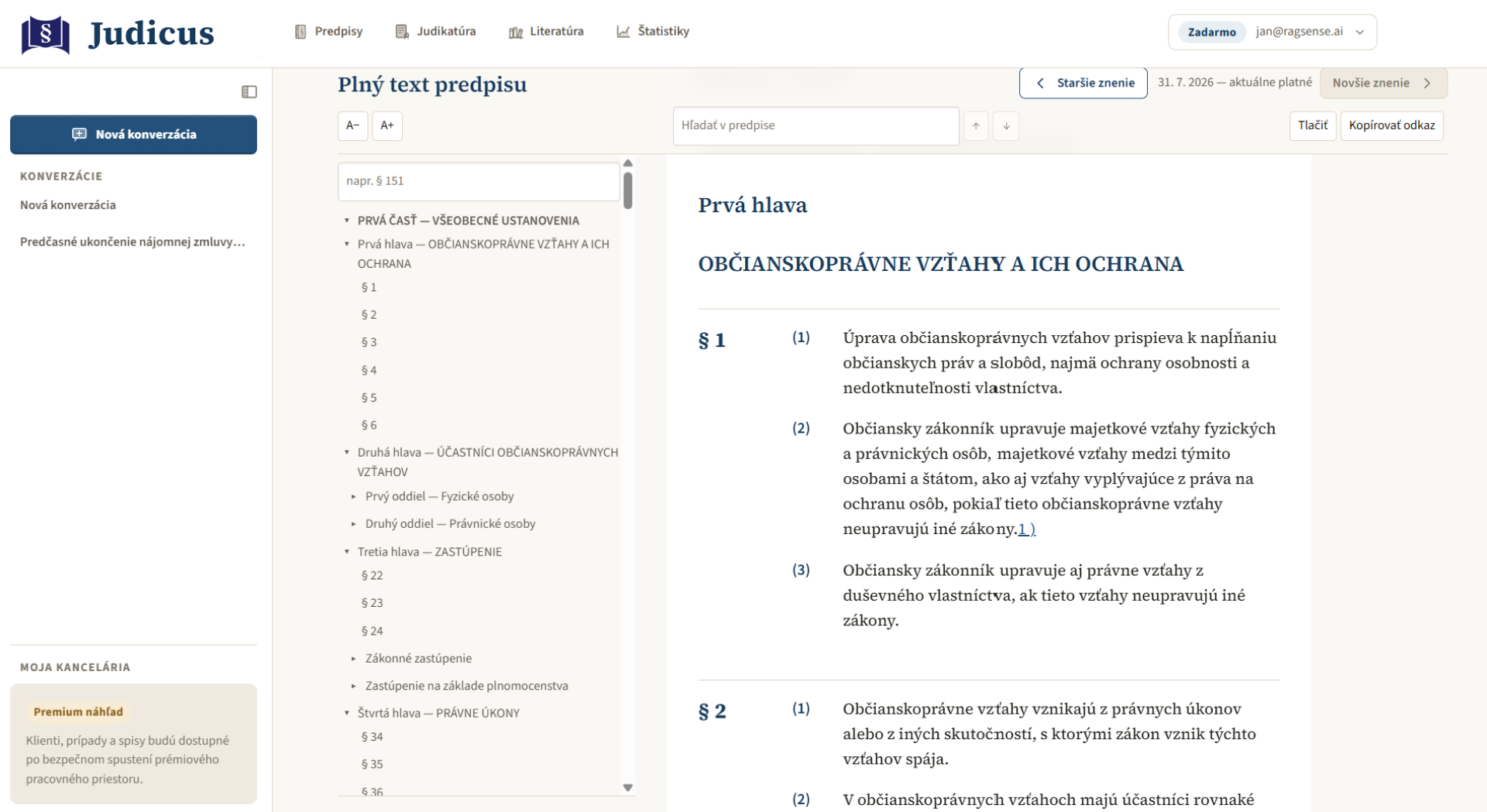
“What did this provision say when the contract was signed, and does our precedent interpret that version?” Document search alone cannot answer this. Judicus keeps every version of a statute and its legal links, so lawyers work from the wording that applied, not today’s.
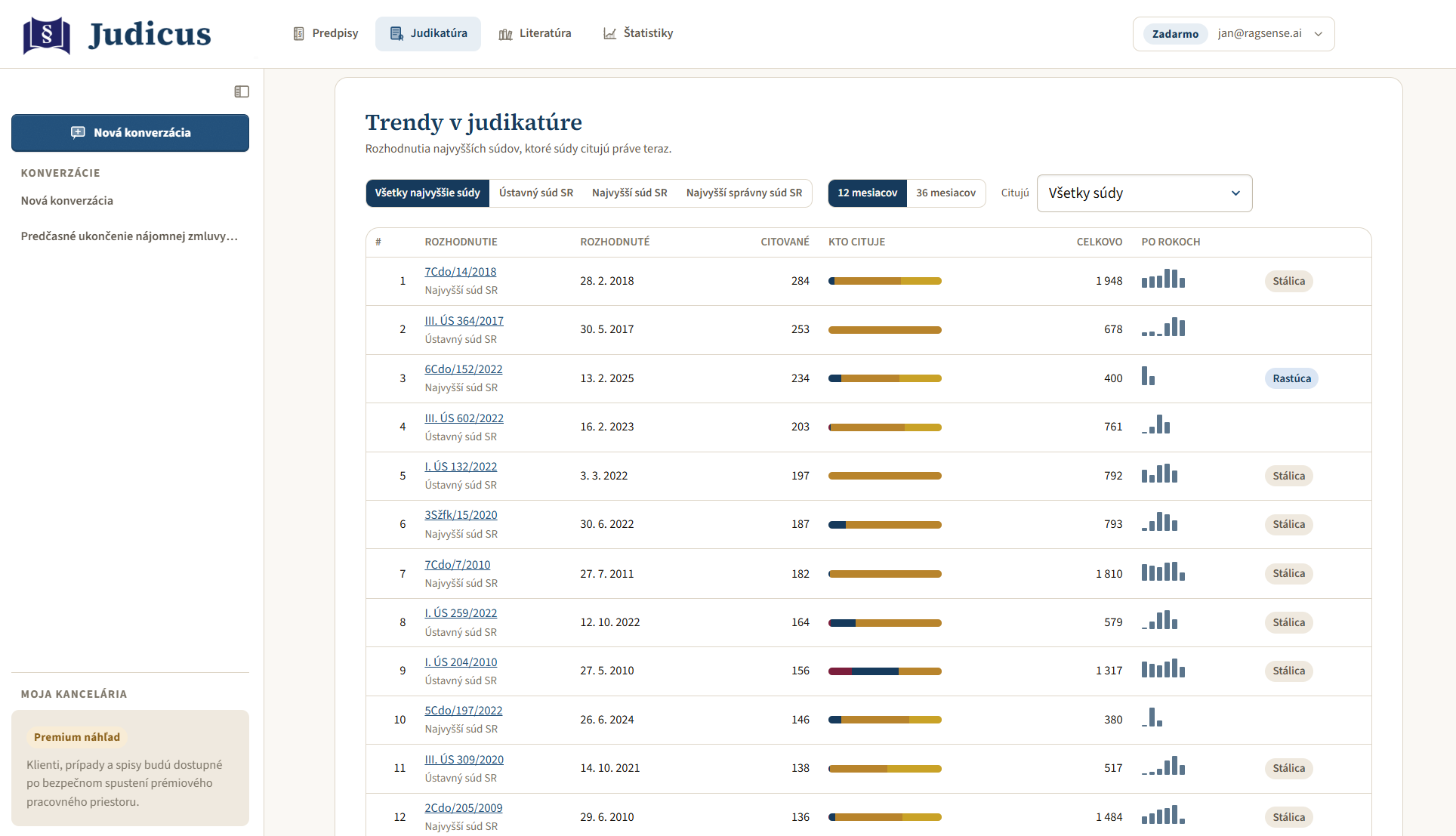
With more than 2.5 million resolved citations, Judicus knows not only what a decision says but how the courts use it. Trend views rank the apex-court decisions cited most in the last 12 or 36 months, show who cites them and how that evolved year by year.
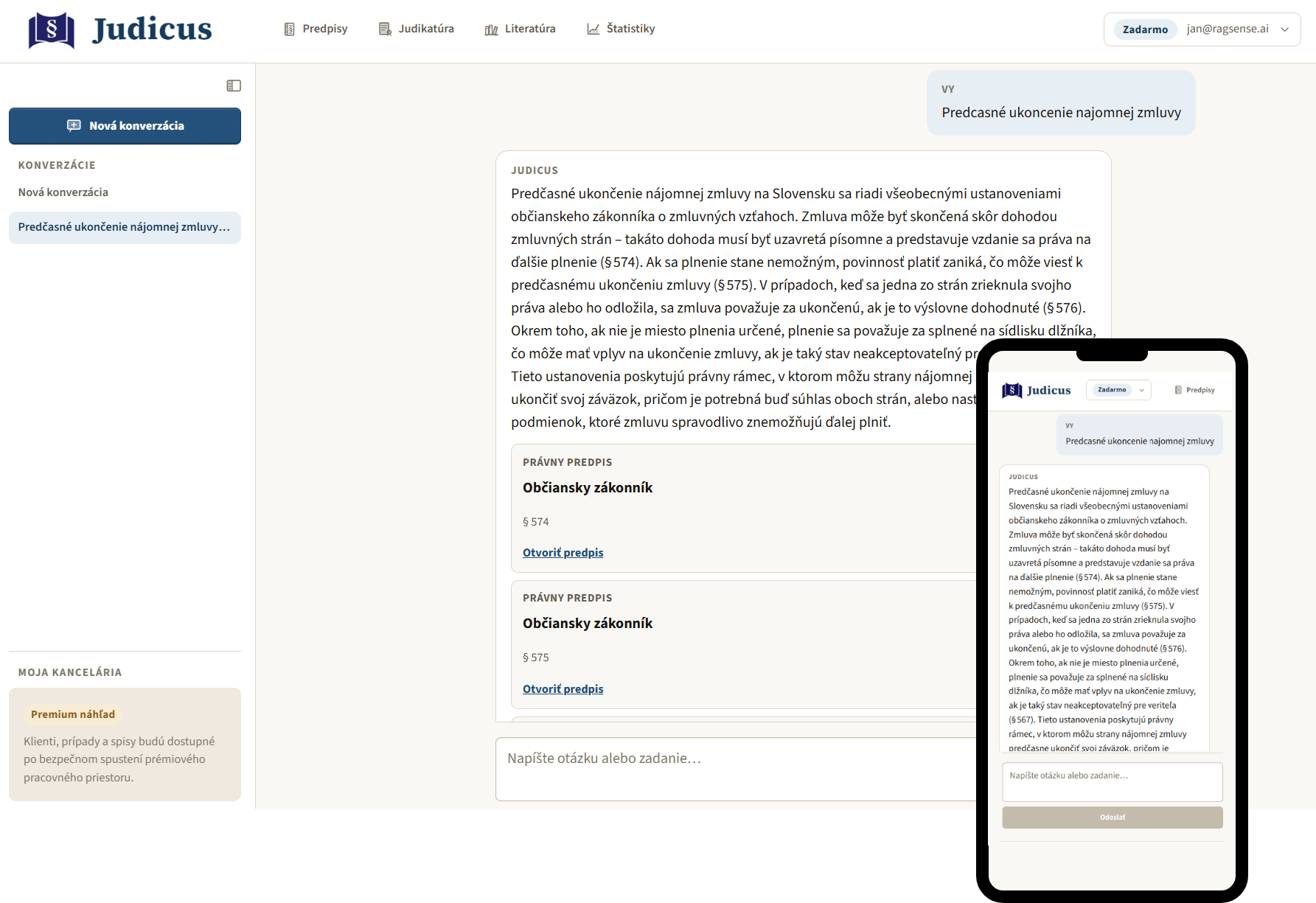
Lawyers ask in plain language, on desktop or on their phone. Judicus answers with the reasoning and the provisions it relies on, each linked to the statute so it can be checked in one click.
Useful material is scattered across years of pleadings, opinions, templates, emails and evidence. The private workspace, now in preview, indexes it locally and applies each matter’s permissions at retrieval time. “Have we handled this before?” becomes an answer, not a search across shared drives and people’s memories.
The data label decides who can see a document and where it can be processed. Every run records the sources and versions supplied to the model, and every outbound request is logged with its route and reason.
Judicus supplies the GPU, storage, software, legal-data updates, monitoring and support. The firm keeps the files and the keys. Capacity is sized for what matters: the firm’s scanned matters, evidence, recordings and historical work product.
Schedule a personalized demo and discover how Ragsense can transform the way your organization works with AI.